
Common Branding Mistakes Startups Make (and How to Avoid Them)


For many startups, branding is one of the most misunderstood parts of growth. It’s often treated as a visual task: a logo, a color palette, maybe a sleek website. But in reality, branding is not what your business looks like. It’s how your business is understood.
When that understanding is unclear, the impact shows up quickly. Your message fails to connect, your product starts to feel interchangeable, and conversion becomes harder than it should be. The challenge isn’t a lack of effort. It’s a lack of direction.
Many startups invest time and resources into branding, yet still struggle to communicate what makes them different. Not because the product isn’t strong, but because the brand doesn’t clearly position it in the market. If you're unsure how to define that positioning and align it with the right audience, you can explore this guide on defining your brand positioning and audience personas.
In this guide, we’ll explore the most common branding mistakes startups make and, more importantly, how to avoid them with a clear and structured approach.
1. Why Most Startup Branding Fails Before It Even Starts
Most branding problems don’t begin at the design stage; they begin much earlier. Instead of taking the time to define what their brand should communicate, many startups move straight into execution. They start building visuals, writing copy, and launching pages without first clarifying how they want to be perceived. At first, this can feel like progress. But over time, it creates a lack of direction that becomes harder to fix.
When the foundation isn’t clear, the brand starts to feel inconsistent. The message shifts depending on the channel, the audience isn’t clearly defined, and the positioning remains too broad to be meaningful. Even if the design looks polished, it doesn’t translate into understanding or trust.
This is why some startups invest heavily in branding but still struggle to communicate what makes them different. The issue isn’t execution; it’s the absence of a clear strategic base.
A good example of getting this right is Stripe. Instead of trying to explain everything they offer, their messaging consistently focuses on online payments infrastructure, making their role immediately clear without overcomplicating it.
Strong branding doesn’t start with visuals. It starts with clarity. And without that clarity, even the most well-designed brand will struggle to perform.
2. 10 Common Branding Mistakes Startups Make
Many startups invest in branding early on, but often focus on the wrong elements or skip the strategic foundation entirely. As a result, the brand may look polished on the surface but fail to communicate value, differentiate from competitors, or build trust with the right audience. Understanding these common mistakes helps ensure your branding supports real business growth, not just visual appeal.
1. Treating Branding as Just a Logo
Many startups approach branding as a visual task, focusing on logos, colors, and design early on. While these elements are important, they are only the surface level of a brand. Without clear positioning and messaging behind them, even the best-looking design fails to communicate real value or create differentiation.
One of the most common branding mistakes startups make is reducing branding to just a logo and visual design.
While logos, colors, and websites are important, they are not the brand itself; they are the result of it.
A strong brand is built on:
clear positioning
defined messaging
consistent perception
When these are missing, design becomes decoration instead of communication.
Why this is a problem
The brand looks good but feels generic
Messaging is inconsistent across channels
There is no clear differentiation
Users don’t form a strong connection
Example: Companies like Nike, Apple, and Coca-Cola don’t rely on logos alone.
Nike: campaigns and messaging always reinforce motivation and action
Apple: every touchpoint reflects simplicity and premium experience
Coca-Cola: instantly recognizable through color, typography, and emotional storytelling
Their strength comes from what they stand for and how consistently they communicate it, not just their logos. When branding is reduced to visuals, teams often keep redesigning instead of fixing the real issue: clarity. This leads to cycles of redesign without measurable improvement in performance.
2. Lack of Clear Positioning
When a brand lacks clear positioning, it becomes difficult to understand and easy to ignore. Many startups rely on broad, generic descriptions that sound professional but fail to communicate anything distinctive. If your message could apply to multiple competitors, it doesn’t help your audience choose you.
Strong positioning simplifies decision-making by clearly answering:
Who it’s for
What it does
Why is it different
Without this clarity, messaging becomes vague, and users are forced to figure things out themselves, which usually leads to drop-off.
Why this is a problem
The brand sounds like everyone else
Users don’t immediately understand the value
Messaging feels vague and forgettable
It becomes harder to stand out in a crowded market
Example: Spotify; “Music for everyone”
This positioning communicates accessibility and simplicity. The product experience reinforces this through an intuitive interface, personalized playlists, and easy access across devices. Clear positioning doesn’t just improve branding; it makes the entire business easier to understand and choose.

3. Trying to Target Everyone
Trying to appeal to everyone often leads to a message that resonates with no one. When the target audience is too broad, communication becomes vague and ineffective.
One of the most common mistakes startups make is trying to target everyone at once. When the audience is too broad, the message becomes generic and loses impact.
Strong brands start with a clearly defined audience and build their product and communication around specific needs. Expansion can come later, but clarity comes first.
Why this is a problem
The message feels vague and unfocused
It becomes harder to connect with users
The product positioning weakens
Engagement stays low
Example: Slack; team communication for internal teams
This focused approach allowed Slack to solve a specific problem, build strong early adoption, and establish a clear position before expanding to a broader audience.
Messaging becomes more specific, the product better fits user needs, and engagement increases. Strong brands don’t try to reach everyone; they start by being highly relevant to the right audience. Narrowing your audience doesn’t limit growth; it accelerates it. Clear focus leads to stronger messaging, higher engagement, and more efficient acquisition.

4. Inconsistent Brand Messaging
Consistency is what makes a brand recognizable over time. When tone, visuals, and messaging shift across channels, the brand starts to feel fragmented. Even if each piece works on its own, the overall perception becomes unclear.
One of the most common branding mistakes is inconsistency across different touchpoints. When messaging and visuals are not aligned, the brand loses clarity and becomes harder to recognize. A strong brand should feel the same wherever you encounter it.
Why this is a problem
The brand feels fragmented
Recognition becomes weaker
Trust takes longer to build
Messaging loses clarity
Example: McDonald’s; consistent colors, visuals, and messaging
McDonald’s maintains a highly consistent brand identity across its restaurants, packaging, advertising, and digital channels. The red and yellow color palette, typography, and tone remain instantly recognizable wherever the brand appears.
The brand becomes easier to recognize, trust builds faster, and communication feels clearer and more cohesive. Consistency doesn’t limit creativity; it strengthens recognition.

5. Ignoring the Customer Perspective
One of the subtle but critical branding mistakes is building the message from the company’s perspective instead of the customer’s.
Startups often focus on what they want to say, features, capabilities, or internal goals. But users don’t evaluate brands based on what they offer. They evaluate them based on what those offerings mean for them. Effective branding reframes the message around the user.
Why this is a problem
Messaging feels self-centered
Users don’t see clear value for themselves
Emotional connection stays weak
Conversion becomes harder
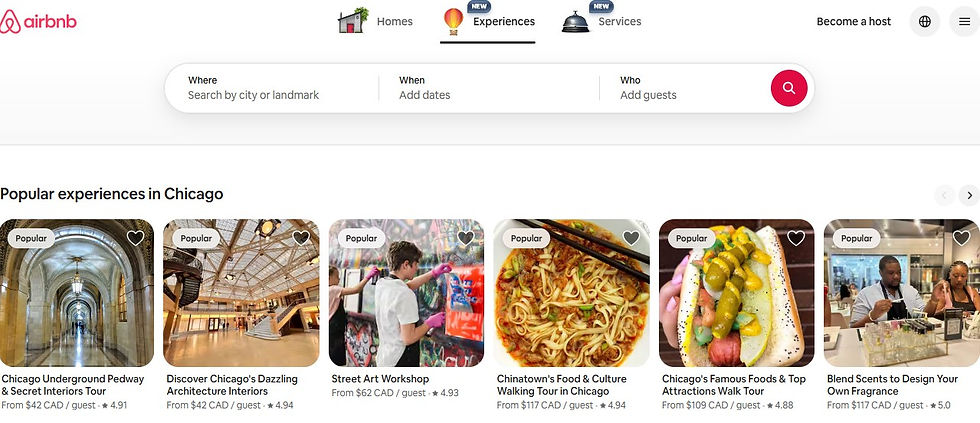
Example: Airbnb; belonging and experience, not just accommodation
Instead of focusing on listings or features, Airbnb communicates the feeling of belonging and living like a local. This shifts the perception from a transactional service to a meaningful experience.
The message becomes more relatable, engagement increases, and users connect with the brand more easily. When branding reflects the customer’s perspective, it becomes easier to build trust and drive action.
6. Copying Competitors Instead of Differentiating
Looking at competitors is a natural starting point when building a brand. It helps you understand the market and expectations. The problem begins when inspiration turns into imitation.
Many startups adopt similar language, layouts, and messaging structures used in their industry. Over time, this creates a landscape where brands look and sound almost identical. When that happens, users struggle to differentiate between options. Differentiation is not about being louder; it’s about being clearer.
Why this is a problem
Brands start to look and sound the same
Users can’t easily tell the difference
Decision-making becomes harder
The brand loses memorability
Example: SaaS websites, similar headlines and layouts
Many SaaS brands use the same structure: “Grow faster”, “All-in-one solution”, “Streamline your workflow”. While these patterns are familiar, overusing them removes distinctiveness and weakens positioning.
The brand becomes easier to recognize, messaging becomes sharper, and users can quickly understand why you’re different. Strong brands don’t copy the market; they interpret it in their own way.
7. Weak or Generic Value Proposition
A weak value proposition doesn’t clearly communicate why your product matters. It often relies on vague, generic language that sounds professional but lacks meaning. As a result, users don’t immediately understand what they gain or why they should choose you.
Instead of describing features, strong brands focus on outcomes, what the user actually achieves.
Why this is a problem
Messaging feels vague and forgettable
Users don’t understand the benefit quickly
The brand fails to stand out
Conversion becomes harder
Example: Canva; “Design anything”
This message is simple, clear, and outcome-focused. Instead of explaining features, it communicates exactly what the user can achieve, creating any type of design.
Users understand the benefit immediately, messaging becomes more effective, and decision-making becomes faster. A strong value proposition doesn’t describe the product, it communicates the result.

8. No Defined Brand Strategy
Without a clear strategy, branding becomes a series of disconnected decisions. Startups often move reactively, creating content when needed, adjusting messaging based on trends, or redesigning visuals without a clear direction.
While each step may seem logical on its own, the overall brand starts to feel inconsistent over time. A defined brand strategy brings structure and clarity to these decisions.
What a brand strategy includes
Positioning and differentiation
Target audience and personas
Messaging framework
Tone of voice and communication style
Why this is a problem
Decisions feel disconnected
The brand becomes inconsistent
Messaging shifts too often
Growth becomes harder to sustain
Example: Structured brand systems; clear guidelines and direction
Companies that scale successfully don’t treat branding as a one-time task. They build systems and guidelines that define how the brand should communicate and evolve over time.
Decisions become more consistent, messaging becomes clearer, and the brand grows in a more focused direction. Strategy doesn’t slow you down, it keeps you from going in the wrong direction.
9. Poor Visual Identity That Doesn’t Match the Brand
Visual identity is often the first interaction users have with your brand. Before they read a headline or understand your offer, they form an impression based on what they see.
When that visual impression doesn’t align with your positioning, it creates confusion.
For example:
A premium product presented with low-quality visuals
A modern solution paired with outdated design
A simple product explained through overly complex visuals
These mismatches create doubt and reduce perceived credibility.
Why this is a problem
First impression feels inconsistent
Trust decreases immediately
The brand feels less credible
Users hesitate to engage
Example: Tesla; futuristic positioning supported by minimal design
Tesla’s visual identity reflects its positioning as an innovative, future-focused brand. Its website, product pages, and interfaces use clean layouts, bold typography, and minimal elements to emphasize technology and performance. This alignment makes the brand feel advanced, premium, and easy to understand.

10. Not Evolving the Brand Over Time
As startups grow, their product, audience, and positioning naturally evolve. However, many brands fail to reflect that change in how they present themselves.
What worked at an early stage may no longer represent the company accurately. Holding onto an outdated identity can create a disconnect between how the brand is perceived and what it actually offers today. Strong brands adapt as they grow.
Why this is a problem
The brand feels outdated
Messaging no longer reflects the product
Perception and reality become disconnected
Growth becomes harder to support
Example: Instagram; from a simple photo app to a broader social platform
Instagram evolved from a basic photo-sharing app into a multi-format social platform (stories, reels, messaging). Its visual identity and product experience also evolved to reflect this shift.
The brand stays relevant, messaging aligns with current offerings, and users better understand the value. Brand evolution isn’t about changing randomly, it’s about staying aligned with where the business is going.
3. How to Avoid These Branding Mistakes
Avoiding branding mistakes isn’t about fixing things one by one. Most of the time, the issue isn’t execution; it’s the lack of clarity behind it. And without that clarity, every decision, from messaging to design, starts to drift.
Define Your Positioning in One Clear Sentence
The first place to start is positioning. Not a long explanation, not a paragraph, just one clear sentence. If you can’t explain what you do, who it’s for, and why it matters in a single line, your audience won’t figure it out either.
A simple way to structure this is: you help a specific audience achieve a specific result distinctly.
For example, instead of saying “we help businesses grow,” a clearer version would be: “We help early-stage startups generate qualified leads by building conversion-focused websites.” It’s not just more specific, it’s easier to understand, and that directly affects how quickly users decide to stay or leave.
But defining it is only half of the work. You also need to test it.
Show that sentence to a few people outside your company and ask a simple question: “What does this company do?” If the answers vary, the problem isn’t your website or your design, it’s your positioning.
If you’re not sure how to define this clearly or where to start, you can explore our detailed guide on “Defining Your Brand Positioning Strategy and Audience Personas: A Strategic Guide for Growing Brands”.
Narrow Your Audience to Strengthen Your Message
Once positioning is clear, the next challenge is focus. Many startups try to keep their audience broad, thinking it gives them more opportunities. In reality, it usually weakens the message. When you try to speak to everyone, your communication becomes generic, and generic brands are easy to ignore.
Clarity comes from constraint. When you define a specific audience, your messaging becomes sharper, your examples become more relevant, and your conversion path becomes more natural.
Build a Messaging Structure
With positioning and audience in place, messaging starts to take shape. This is where many brands become inconsistent. Not because they lack ideas, but because they lack structure.
Strong brands don’t rely on random copy. They built a simple system: a clear value proposition, a few supporting messages, and a consistent tone.
For example, if your core message is about improving conversion, everything, your homepage, your ads, your content, should reinforce that same idea from different angles. When that alignment is missing, users feel the disconnect, even if they can’t explain it.
Make Sure Your Design Reflects Your Positioning
Design comes after this, not before. A lot of branding problems actually start when design decisions are made without a clear message behind them. The result looks good, but doesn’t communicate anything meaningful.
Instead of asking “does this look nice?” a better question is: “does this reflect how we want to be perceived?”
A premium brand should feel minimal and confident. A beginner-friendly product should feel simple and easy to navigate. When design and positioning support each other, trust builds faster.
Create Simple Rules to Stay Consistent
To keep everything consistent as you grow, you don’t need complex brand books. You just need a few clear rules.
For example:
Always lead with outcomes, not features
Keep language simple and direct
Avoid generic phrases that could apply to anyone
These small decisions create a surprisingly strong level of consistency over time.
Continuously Test and Refine Your Brand
And finally, branding should never be treated as finished. The easiest way to evaluate it is not through internal discussions, but through real user reactions.
Ask simple questions:
“What do you think we do?”
“Why would you choose us?”
If the answers are unclear or inconsistent, that’s your signal. Not to redesign everything, but to go back and refine your positioning and messaging.
4. Takeaways: Building a Clear Market Position and Audience Focus for Sustainable Growth
Branding is often treated as a creative exercise, but in reality, it’s a growth function. When done right, it doesn’t just make your business look better; it makes it perform better. The brands that grow consistently are not the ones that communicate more, but the ones that communicate more clearly.
When positioning is clear, users understand faster.
When messaging is focused, decisions become easier.
When the brand is consistent, trust builds naturally over time.
This is what reduces friction across the entire customer journey. Instead of forcing users to figure out what you do, strong brands remove that effort completely. And that has a direct impact on performance, from lower acquisition costs to higher conversion rates.
At the same time, branding creates alignment internally. It gives teams a shared direction, reduces guesswork, and makes decision-making faster and more consistent. Without that structure, growth often becomes reactive and difficult to sustain. In the long run, the difference between brands that scale and those that struggle is not effort; it’s clarity.
5. How DigiMinds Supports Brands in Defining Position and Audience Personas
DigiMinds helps brands build a clear and consistent foundation by aligning positioning, messaging, and value proposition from the start. Instead of relying on broad or generic communication, the focus is on defining who the brand is for, what it offers, and how it creates value in a way that is easy to understand and relevant to the right audience.
This approach brings structure to how brands communicate and grow. Audience personas, messaging, and content are developed as part of a connected system, where SEO, content strategy, and conversion optimization work together. As a result, brands don’t just attract traffic, they attract the right audience, communicate more clearly, and create a more consistent path toward conversion and long-term growth.
6. FAQ
1. What are the most common branding mistakes startups make?
Startups often struggle with unclear positioning, trying to target too broad an audience, inconsistent messaging, and relying too heavily on visuals without a clear strategy behind them.
2. Why is branding important for startups?
Branding helps startups communicate what they do, who they serve, and why they matter. When done well, it builds trust, creates differentiation, and supports higher conversion rates.
3. How can startups improve their branding?
The most effective approach is to start with clear positioning and audience definition, then build consistent messaging and align design with that foundation.
4. What is a strong brand positioning?
A strong positioning clearly defines the target audience, the problem being solved, and what makes the brand different in a simple and specific way.
5. What should a startup brand include?
A well-structured startup brand typically includes:
clear positioning
defined target audience
strong value proposition
consistent messaging
aligned visual identity
6. How long does it take to build a strong brand?
Branding is not a one-time process. While a solid foundation can be created early, it requires continuous refinement as the business grows.
7. Can branding directly impact conversion rates?
Yes. When a brand clearly communicates its value and speaks to the right audience, users understand it faster, trust it more, and are more likely to take action.
7. Contact & Support
Branding is not just about how your business looks, it’s about how clearly it communicates and how effectively it converts. When positioning, messaging, and brand experience work together, your brand becomes a structured system that supports growth rather than a collection of disconnected elements.
At DigiMinds, we help startups and growing businesses move beyond fragmented branding efforts and build clear, scalable brand foundations. By aligning positioning, audience personas, messaging, and content strategy, we ensure your brand communicates the right value to the right audience at every stage.
From defining your market position to refining how your brand speaks and converts, our approach focuses on long-term clarity and performance. Every step is designed to make your brand easier to understand, easier to trust, and easier to choose.
Explore our branding and strategy solutions to build a brand that drives real growth.
If your brand feels unclear, inconsistent, or difficult to scale, it may be time to rethink how it is positioned and communicated.
Contact us via phone at +90 507 830 2127 or email at info@digimindssolutions.com.
References:


Comments